
The Moral Philosopher and the Moral Life
Just who decides what's moral anyway?

I am writing a short essay series on the American philosopher/psychologist William James. For each installment I will read an essay he wrote and then write about it. This is Part 1 of 4. The essay is “The Moral Philosopher and the Moral Life.”
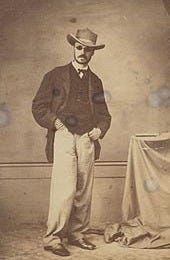
William James is a baller.
That’s what a friend of mine says every time James comes up in conversation. And you know what? He’s right.
In my quest to learn all that I can from the greatest psychologist that ever lived, William James, I read his essay entitled “The Moral Philosopher and the Moral Life.” This is my essay talking about his essay.
I have no idea what to say about it.
I mean, there are things that I could say about it, just nothing substantial or serious. I could give you an excellent summary of all of his main points. I could rave on and on about how brilliant William James was as both a psychologist and a philosopher. I could praise his prose and how he is able to articulate clearly and interestingly even the densest of philosophical ideas. I could argue for why you should base all of your ethical reasoning on this singular essay, because it just holds all of the answers.
What I can't do, but what I will try to do anyway and fail at, is provide an extended application of his ideas in various domains like mainstream psychology or what have you. Or analyze his ideas and draw connections with other ideas and build off of James to construct new and original ideas of my own. In short, I have absolutely nothing intelligent to say about this essay that you couldn't get just by reading the essay itself. And it’s better written anyway. It's not that there's nothing of value in this essay.
It's that I'm just not good enough for it.
So I will do what I always do when I don't know what to talk about, and talk about the Restored Gospel of Jesus Christ.
The Essay
William James is in my group of historical people that I wish could have had dinner with Joseph Smith (also included are St Augustine, Francis of Assisi, Soren Kierkegaard, George MacDonald, and CS Lewis). This is because his ideas often seem to hit so closely to the truths found in the gospel. This essay, “The Moral Philosopher and the Moral Life,” is a perfect case in point.
To pick a particularly rich example of what I mean, at one point in the essay James tackles what he calls the “metaphysical question” of ethics. This is the question of what concepts like good, evil, obligation, etc., even mean in the first place. He explains first that in a purely material world, e.i., a world with no sentient, conscious beings in it, concepts of good or evil, better or worse, right or wrong, simply have no meaning whatsoever. “Physical facts simply are or are not; and neither when present nor absent can they be supposed to make demands.”
In other words, rocks don’t care if there’s a better or worse way to be rock. In fact, they don’t even not care, because they are not conscious of even being a rock. They simply exist. They demand nothing and receive nothing.
It is only with consciousness that ethics begins to have any meaning. “Goodness, badness, and obligation must be realized somewhere in order really to exist.” There has to be some being (not some thing, because if the thing were sentient then it wouldn’t be a thing) who is capable of desiring or not desiring, of making judgements among the relations of the world. Somebody who can realize these concepts into existence. It turns out one answer to “if a tree falls in a forest and no one’s around to hear it, does it make a sound?” is “nobody cares,” because nobody was around to hear it.
So, a sentient being (or multiple beings) is in the world, and now suddenly differences can exist. Meaning can exist. As James puts it, “Moral relations now have their status, in that being's consciousness. So far as he feels anything to be good, he makes it good.” A rock is not inherently good. It just is. But if I pick up the rock and feel that it is a good rock because maybe it’s the right shape to skip or it’s a pretty blue color, then I make the rock good. It is a good rock because of me.
And this is where I want to pause with the summarizing of James’ arguments and turn to the gospel.1
There are three restoration scriptures I wish to bring up: D&C 131:7, 2 Nephi 2:11, and Moses 2 (actually, for my purposes Genesis 1 is just as usable as Moses 2, but I chose the former so as to stick with the whole “restoration” theme). Each of these three scriptures contain a particular truth of the gospel relevant to the arguments James’ presents in “the moral philosopher and the moral life.”
Embodied Morality
First, D&C 131:7:
“There is no such thing as immaterial matter. All spirit is matter, but it is more fine or pure, and can only be discerned by purer eyes.”
There is an idea in philosophy known as ‘immaterialism’ or ‘idealism’ (either term works for the purposes of this essay). Basically, it’s the idea that the most foundational building block of the universe, the root of all essence, is something that is not physical. It is not a material thing that can be seen or touched; rather it’s more like an abstract concept or a hypothetical idea. This idea has been around for a long time; a good ancient example are Platonic forms. Plato figured that there was an abstract, higher level ideal form that everything physical is derived from. Every horse is a physical shadow of the non-physical, ideal horse; every chair a representation of the form of the chair. In terms of ethics, we often invoke abstract concepts like “the greater good” or “the law of justice.” We feel like the law of justice is a real, actual thing that governs whether or not something is just.
Here’s the thing though: it’s not. The law of justice isn’t…real. “There is no such thing as immaterial matter.” To put it another way, if you think something exists but it possess no physical form, no material matter, it doesn’t actually exist. It’s imaginary, it’s made up. It’s a hypothetical construct that may refer to something physical and real, but it itself is just that: a hypothetical.2 The law of justice (or any other abstract concept) is only real in the sense that it is an idea that people have actually thought of. It is not real in the sense that it possess tangible, actual existence independent of any conscious beings.
This may seem like a rather pedantic philosophical issue to be considering, the existence or non-existence of immaterial things, and a rather esoteric aspect of the gospel to bother with. But it points to a profound truth: morality is embodied. Any concept of ethics, any idea of good and evil, can only has any genuine meaning insofar as it stems from a human being. Living morally, then, doesn’t mean attempting to adhere to some abstract code of ethics that doesn’t actually literally exist; it means attempting to adhere to an idea of ethics that somebody (you or someone else) felt was a decent way to live.
And William James, he got this. He understood this concept completely. That’s part of the reason he spends so much time in the beginning of his essay on a fact so obvious it feels trivial: non-thinking stuff doesn’t do any thinking. If you want morality, if you want ethics, judgements, evaluations, assessments, then you have to have somebody who can actually think about all of that, somebody to whom those ideas and concepts mean something and feel different depending on what they are.
Automatic Opposition
Which brings me to scripture number two, 2 Nephi 2:11:
“For it must needs be, that there is an opposition in all things. If not so, my firstborn in the wilderness, righteousness could not be brought to pass, neither wickedness, neither holiness nor misery, neither good nor bad.”
Doctrinally speaking, this scripture will probably feel a little more relevant to our salvation than the one about immaterial matter. We need opposition in order to live meaningfully. Bad things need to exist in order for good things to exist. If there was no such thing as law, then there would be no such thing as sin, which would mean that righteousness would be impossible, “neither holiness nor misery.” “Wherefore, all things must needs be a compound in one,” which is to say that everything would ultimately mean the same thing, because nothing means anything at all. Without opposition, God’s purposes are frustrated because there is no purpose. Nothing matters.
So yeah, members of the Church of Jesus Christ of Latter-day Saints really like 2 Nephi 2:11, because it explains why hard, difficult, painful, bad stuff needs to exist in order for any of the good stuff to also exist. We take the good with the bad, and it’s better than nothing.
Now let’s apply what we’ve learned from William James and D&C 131:7 to this scripture. Remember, there is no morality in the world without somebody to think about it, to embody morality. In James’ hypothetical world with no conscious beings, morality simply doesn’t exist. But as soon as a conscious thinker enters the picture, morality is there. “The moment one sentient being, however, is made a part of the universe, there is a chance for goods and evils really to exist.” In other words, our very existence as human beings is what generates opposition in the world.
Here I think we can expand our understanding of ‘opposition’. Yes, it can mean both good and bad. It could also just mean ‘opposites’ or ‘options’. We create options out of the world we live in, and those options are what create meaning. When God told Adam and Eve not to eat the fruit of the Tree of Knowledge of Good and Evil, they immediately had the option to eat it, long before the serpent showed up. When Moses came down with the ten commandments, he also came down with at least twenty different choices for us to make.
While the choices we make are often the result of a rational, conscious decision making process, the choices themselves typically seem to be generated automatically. I may think about and decide if I want to walk or ride my bike to work, taking into consideration things like the outside temperature, if I’m running late or not, etc. But the option to do either simply exists in tandem with my own existence.
So human beings create opposition, and thus morality, simply by being conscious of the world. This elevates the world from an amoral, uncaring material world to a world full of differences between good and evil. Recall James’ words, “Moral relations now have their status, in that being's consciousness. So far as he feels anything to be good, he makes it good.” Those differences are imposed upon the world by the conscious being, and thus there is an opposition in all things.
However, while it may be the case that good and evil have their roots in conscious beings, how are those conscious beings expected to evaluate things like less good or more good? How do we settle on a hierarchy of ethics? James posits that this isn’t really a problem for a conscious being (i.e., us), because it will naturally be the case that some ideas will just feel better than others:
“...the only trouble the…thinker is liable to have will be over the consistency of his own several ideals with one another. Some of these will no doubt be more pungent and appealing than the rest, their goodness will have a profounder, more penetrating taste; they will return to haunt him with more obstinate regrets if violated. So the thinker will have to order his life with them as its chief determinants, or else remain inwardly discordant and unhappy.”
Personally, I’m not sure why some things will simply feel better, will have a “more penetrating taste,” than other things. But it does seem to be the case that people’s ethical decisions are based mostly on intuition and feeling rather than deliberate, rational thought. I don’t want to lie to my wife because it just feels wrong. Lying to her would come back to haunt me with “more obstinate regrets.”
So be it. But it still does not answer the question of how we settle all of these moral differences amongst ourselves. Afterall, there is not just one conscious being in this world.
There are billions.
And every single one of us has his or her own personal, unique set of moral evaluations. We all feel differently about pretty much everything.
How on earth do we settle all of the inevitable disagreements that come from this? Fear not, James recognizes this problem and gives the obvious solution:
“If one of the thinkers were obviously divine, while all the rest were human, there would probably be no practical dispute about the matter. The divine thought would be the model, to which the others should conform.”
Aha! If it so happens that one of those conscious beings just happens to be God, then obviously he will set the standard for morality, and the rest of us really ought to fall in line, because we are so obviously not divine.
Now, James does present some good solid arguments for what to do in case there isn’t a god, or you happen to be someone who doesn’t believe in God. In fact, most of the essay “the moral philosopher and the moral life” is dedicated to that question of hierarchy, or how we decided which goods are most important.3 But I’m going to skip over those for the purposes of this essay and keep focus on the importance of having a deity involved in the question. Because, as James points out later on, even if there is a divine being we can follow, why should we? Who says we have any obligation to follow God; what claim does he have on us?
Claims and Obligations
Scripture number three: Moses 2. The whole chapter. Don’t worry, I’m not going to copy and paste it all here, you can just go read it. It’s the chapter where Moses learns that God created everything. Notably, this includes us.
The ideas of claims and obligations are what James uses to show that some people do have more say in things than others. As part of our inherent moral valuing that is always going on, we recognize that we have claims over some people and obligations to others. There is no obligation without a claim by some concrete person (meaning, we have no obligations to a rock, because a rock is not a person and just can’t have a claim on us). Conversely, if someone has a claim over us, we have an obligation to them. And that’s that. It doesn’t matter if we like having an obligation or not, it doesn’t even matter if we think the claim over us is valid. The fact that the claim is there at all is what makes it valid. We can choose to fulfil or ignore our obligations, but ignoring them doesn’t make them go away.
In regards to God and why we should follow his ethical vision of life, the question is: What’s his claim on us? Why are we obligated to follow and obey him? I refer back to Moses 2, specifically verse 27:
“And I, God, created man in mine own image, in the image of mine Only Begotten created I him; male and female created I them.”
I think it’s fair to say that God, as the creator of the universe and everything in it, including us, has a pretty big claim over us. You know, among other reasons.4
Let’s review a bit. Things are good or bad because people make them so. God, as a person, also makes things good or bad. However, his evaluations are on a different level than ours, because he is divine. Since he’s divine (and we’re not), he gets to say with the most confidence what is good or bad. Since we owe our very existence to God, he has a claim on us. Since he has a claim on us, we are obligated to listen to him and do what he says. In other words, we are obligated to fall in line with what he considers to be the best way of living. Thankfully, what he considers to be the best way of living is, in fact, the best way of living. Because, to come full circle, it is God himself that determines what is good or bad.
James doesn’t name it outright, but what he’s describing is divine command theory. There is an philosophical ethical question that goes all the way back to the ancient Greeks. Socrates version was “Is something virtuous because the gods love it, or do the gods love it because it is virtuous?” In other words, are actions good because God says they're good, or does God command certain actions because the actions are good independent of God? William James comes down on the side of things are good because God says they are. He closes his essay by saying:
“The stable and systematic moral universe for which the ethical philosopher asks is fully possible only in a world where there is a divine thinker with all-enveloping demands. If such a thinker existed, his way of subordinating the demands to one another would be the finally valid casuistic scale; his claims would be the most appealing; his ideal universe would be the most inclusive realizable whole.”
For James, God is not some abstract, unknowable entity. He’s not the god of the philosophers, the biologists, or the sectarians. God is one of us. He’s a living, conscious, real being. Divine, sure, but still of the same fundamental nature as us. And he cares. God is in the thick of it, right with us, helping us navigate all our demands and obligations. To do this, he doesn’t give us an abstract moral system that we can’t relate to. He shows us his own character, reveals unto us what he is like, and invites us to follow him and be like him.
Sound familiar?
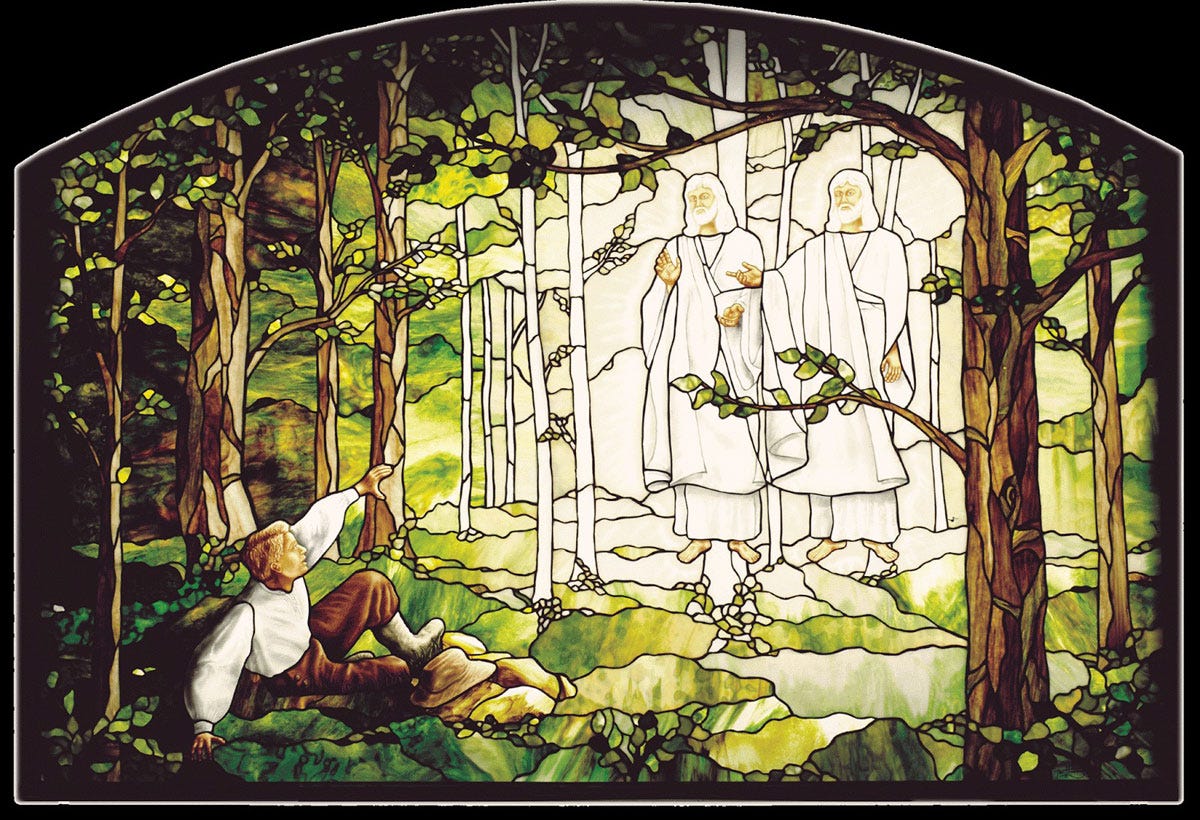
The reality is that I can’t cover even half of what James wrote. My notes from reading it were almost as long as this essay is.
Fun fact, Parley P. Pratt used this line of reasoning to argue that other Christians were actually atheists because they didn’t think God had a body, saying: “The Atheist has no God. The sectarian has a God without body or parts. Who can define the difference?”
This is basically the purpose of all philosophy.
The Atonement of Jesus Christ comes to mind. Not only did God create us, he also saved us.